What Is Montessori? A Parent's Guide to Montessori Daycare
Where Montessori comes from, what you'll actually see in a Montessori room, the myths worth ignoring, and small ways to bring it home.
By The Stars · · 3 min read
If you're looking at daycares, you've probably seen the word Montessori a lot. It can sound like a brand, a type of toy, or something only for older children. It's none of those. Montessori is a way of seeing children, and once you know what to look for, you'll spot it straight away.
Where Montessori comes from
Dr. Maria Montessori was an Italian physician and educator. In 1907 she opened her first classroom in Rome and called it the Casa dei Bambini, the Children's House. Watching the children there, she noticed that they learned best when they could choose meaningful work, use real materials, and do things for themselves.
More than a century later, Montessori classrooms around the world still use the word Casa for the room where children aged about three to six learn together.
The core ideas, in plain language
- ★Follow the child. Children have their own pace and their own interests. Educators watch closely and offer the next step when a child is ready, not when the calendar says so.
- ★Freedom within limits. Children choose their work from what's on the shelves, inside a calm, clear structure. Choice builds focus; structure keeps it safe.
- ★A prepared environment. The room itself teaches. Everything is child-size, beautiful, orderly and within reach, so children can be independent.
- ★Hands first. Learning starts with touch and movement: pouring, sorting, stacking, tracing. Abstract ideas come later, built on what the hands already know.
- ★Practical life. Real tasks like pouring water, wiping a table, watering plants or preparing a snack build confidence, coordination and concentration.
- ★The educator as a guide. Instead of standing at the front, the educator observes, demonstrates and steps back, so the child can say: I did it myself.
What you'll see in a Montessori room
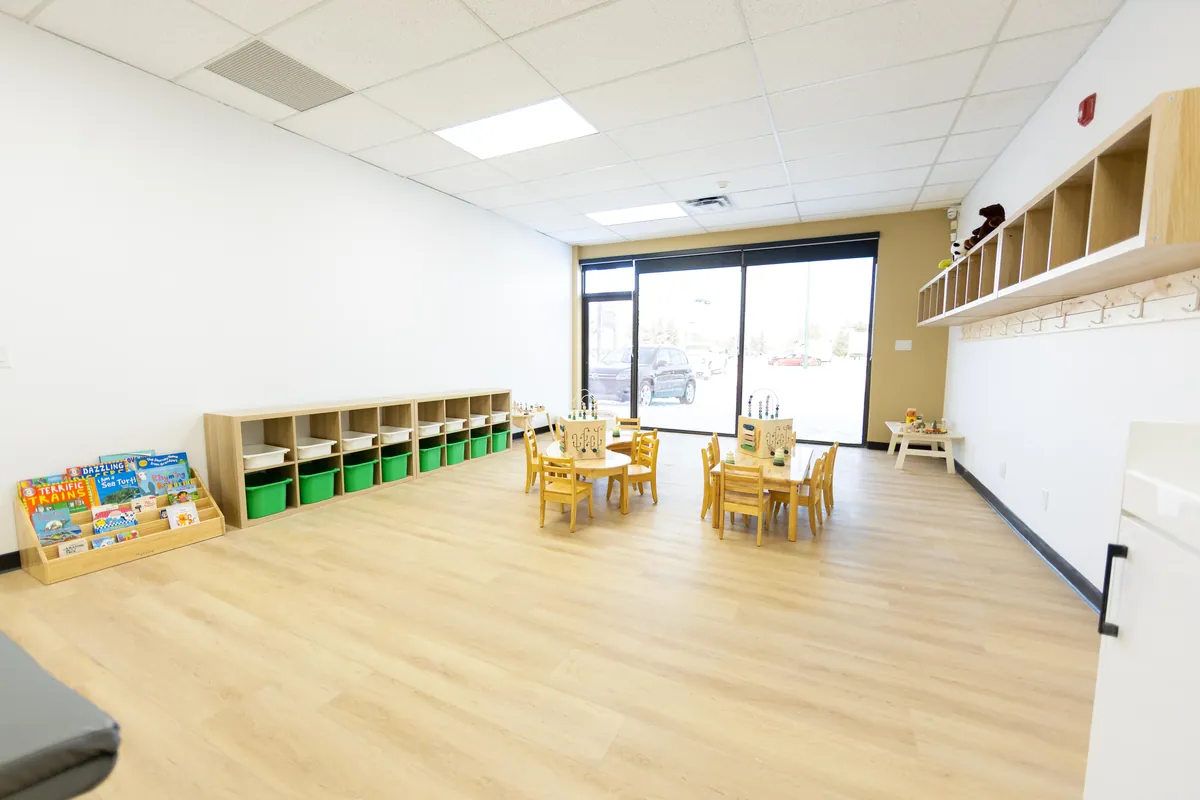
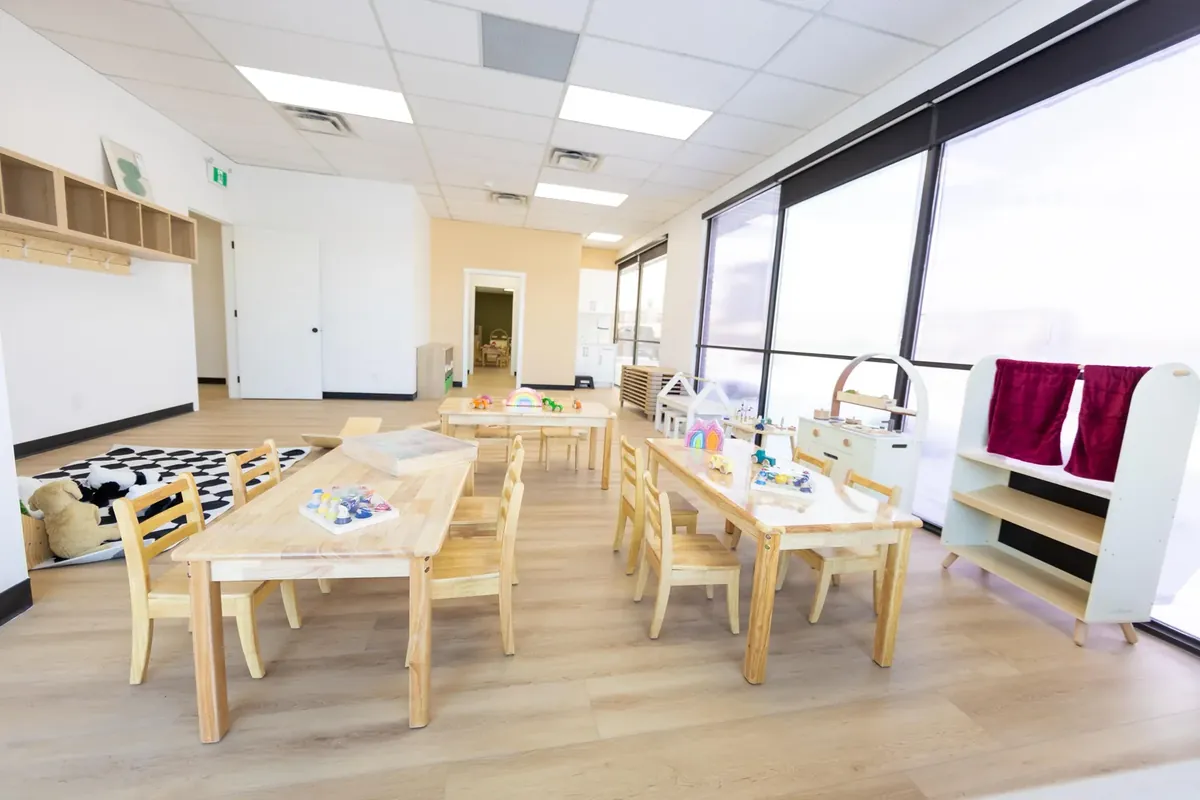
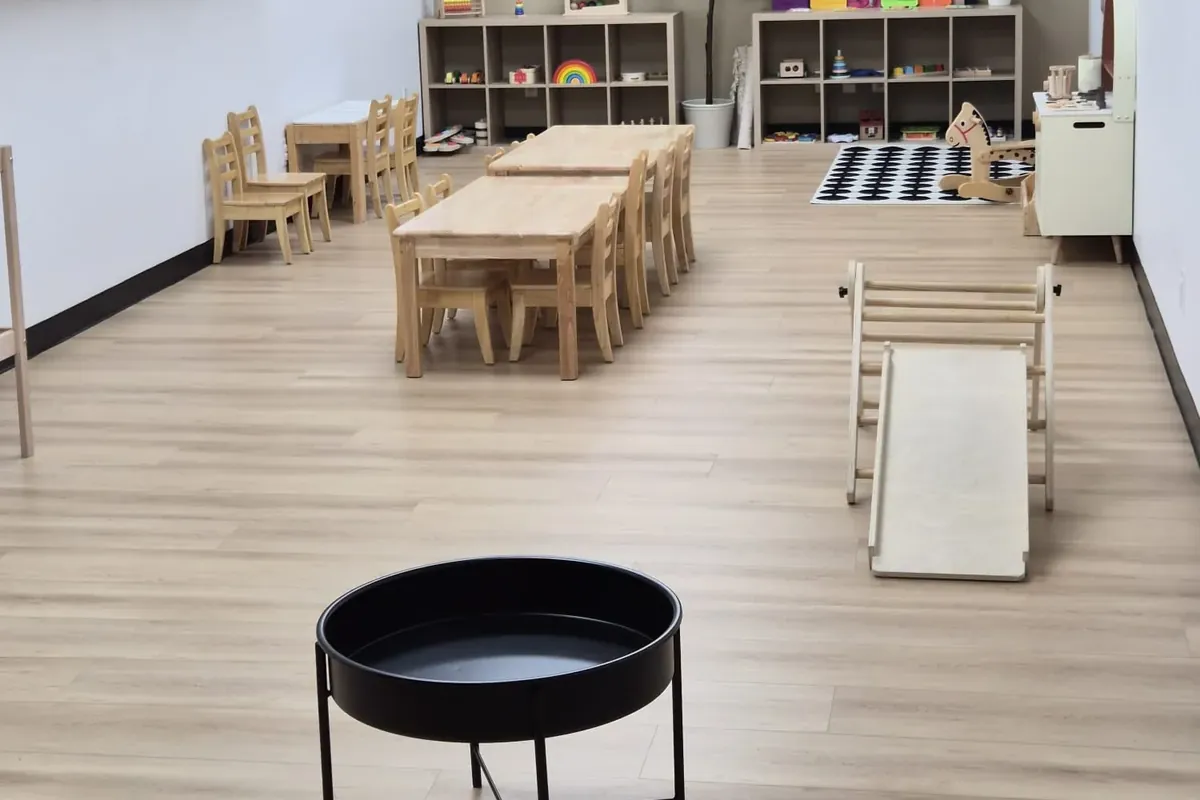
Walk into a Montessori classroom and you'll notice low open shelves with a few materials on each, often on trays. Natural materials like wood, metal and glass. Child-size tables, chairs and tools that really work. Children working alone or in small groups, often deeply absorbed. And a surprisingly calm, busy hum.
For the youngest children, Montessori looks like freedom to move, simple treasure baskets to explore, and lots of language. For toddlers, it's practical life and doing things for themselves. For preschoolers, it adds materials for early math, language and the wider world.
Four Montessori myths
- "It's only for gifted children." Montessori was first developed with children from a working-class neighbourhood. It meets every child where they are.
- "There's no structure." There's plenty, just less of it coming from the front of the room. The structure lives in the routines, the room and the materials.
- "Children don't play." Montessori children play all the time. Much of their play is purposeful, and they choose it themselves.
- "It's too serious for toddlers." Toddlers love real work. Watch a two-year-old pour their own water and you'll see pure joy.
Bringing Montessori home
You don't need special materials. A few small changes make a big difference:
- ★Put a step stool by the sink so your child can wash their own hands.
- ★Keep a few toys on a low shelf and rotate them, instead of a full toy box.
- ★Offer two good choices: the red cup or the blue cup?
- ★Let them help with real jobs: stirring, folding socks, watering plants.
- ★Give them time. Waiting while they put on their own boots is learning in action.